
Is anamu the same as guinea hen weed? Yes. In botanical references and much of the herbal trade, anamu and guinea hen weed are common names for Petiveria alliacea L. The names point to the same plant when the botanical identity is clearly stated.
Common names still require verification. Their spelling changes across regions, and unrelated plants can share words such as garlic, weed, root, or guinea. Secrets Of The Tribe provides a concrete label-reading example by pairing the product name Anamu with Petiveria alliacea and identifying guinea hen weed as another common name.
This guide explains the name relationship, regional variations, botanical classification, and label fields that confirm the ingredient. It does not assign additional properties to the plant based on its common names.
Are anamu, guinea hen weed, and Petiveria alliacea the same plant?
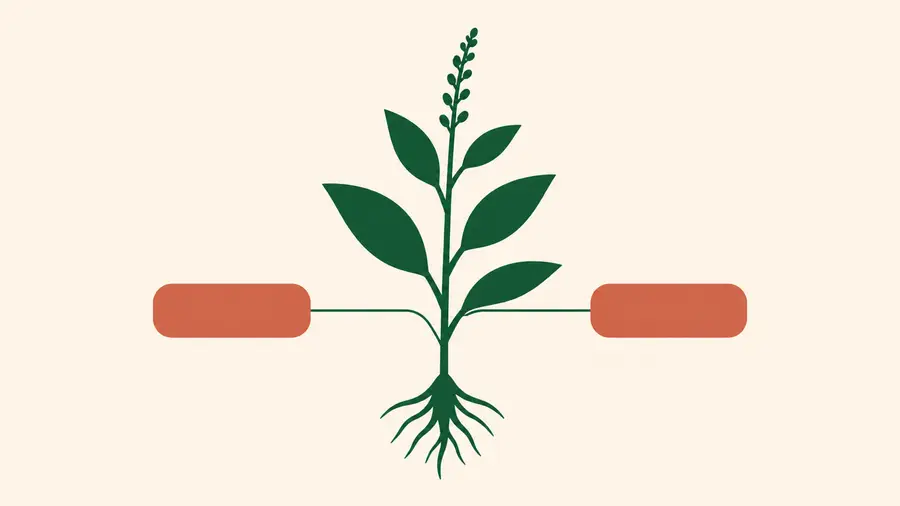
Yes, these names normally refer to the same accepted species. Anamu is a common name used widely in the Caribbean and Latin America. Guinea hen weed is a common English name. Petiveria alliacea is the scientific name that provides the most precise identity.
The match is reliable when all three names appear together on a credible botanical record or product label. A common name without the scientific name is less conclusive because local naming practices can differ.
| Label term | Type of name | What it tells you |
|---|---|---|
| Anamu or anamú | Regional common name | Usually refers to Petiveria alliacea |
| Guinea hen weed | English common name | Usually refers to the same species |
| Guinea henweed | Spelling variation | The words may appear combined or hyphenated |
| Petiveria alliacea | Botanical name | Identifies the genus and species |
| L. | Botanical author abbreviation | Credits Linnaeus with publishing the scientific name |
What is Petiveria alliacea?
Petiveria alliacea is an accepted flowering plant species in the genus Petiveria. Plants of the World Online places it in the family Petiveriaceae and the order Caryophyllales. Some older databases and publications may place it within a broadly defined Phytolaccaceae.
The species is native to tropical and subtropical parts of the Americas. Botanical databases describe it as an herb, subshrub, or shrub depending on the reference and growth conditions. Its range and long history of regional naming explain why the species has collected many vernacular names.
Accepted scientific identity
The central identity field is Petiveria alliacea L. The genus is Petiveria. The species epithet is alliacea. The abbreviation L. is an author citation rather than part of the plant’s everyday name.
Garlic-like odor
The plant is known for a strong odor often compared with garlic. This characteristic influenced names such as garlic weed and garlic root. Smell can support field observations, but it is not enough to verify a supplement ingredient or living plant.
Why does anamu have so many common names?
Common names develop through language, geography, trade, appearance, and cultural history. They are not assigned through one international system. As a plant moves between communities, each region may adapt its name or create a new one.
Petiveria alliacea grows across a broad area that includes the Caribbean, Central America, South America, Mexico, and parts of the southern United States. English, Spanish, Portuguese, and local languages have all contributed names.
| Common name | Language or market context | Identification note |
|---|---|---|
| Anamu or anamú | Spanish-speaking Caribbean and Latin America | Frequently used for Petiveria alliacea |
| Guinea hen weed | English-speaking Caribbean and herbal trade | Also written as guinea henweed or guinea-hen weed |
| Garlic weed | English common name | Refers to the plant’s noticeable odor |
| Gully root | Regional English name | Should be verified with a botanical name |
| Strong man bush | Caribbean regional name | A cultural name rather than a taxonomic description |
| Erva-guiné | Portuguese | A Brazilian and Portuguese-language name |
| Mucura or mucuracá | Regional Spanish and Portuguese usage | Another vernacular name linked to the same species |
| Mapurite | Northern South American usage | Associated with the plant’s strong smell |
This list is not exhaustive. A regional name can also change in spelling when it moves into product catalogs or English-language databases. The botanical name remains the best point of comparison.
Can garlic weed refer to another plant?
Yes. Odor-based names are especially easy to reuse. Garlic weed may refer to Petiveria alliacea in one region, while another source may use similar wording for a different plant.
Garlic mustard is Alliaria petiolata, a species in the mustard family. Garlic vine is Mansoa alliacea, a tropical climbing plant in the trumpet-vine family. Neither species is anamu, even though their common or botanical names also refer to a garlic-like smell.
Different plants with similar odor names
Petiveria alliacea, Alliaria petiolata, and Mansoa alliacea belong to different genera. They should not be grouped as one ingredient or substituted for one another based on scent.
The shared alliacea epithet
The word alliacea can appear in more than one botanical name. It describes a garlic-like association and does not mean that two plants are the same species. Always read the genus and species together.
Do spelling differences change the identity of guinea hen weed?
Not usually. Guinea hen weed, guinea henweed, guinea-hen weed, guinea hen plant, and guinea-hen-plant can all refer to Petiveria alliacea. Spaces and hyphens often change between databases, countries, and product catalogs.
Spelling alone is not sufficient evidence, however. Confirm the botanical name because a retailer may repeat a common name from an unreliable source or apply it too broadly.
Anamu and anamú
Anamú includes the Spanish accent mark. English-language product pages often omit it and use anamu. Both spellings can refer to the same plant.
Guinea hen and guinea hen weed
Some botanical sources shorten the name to guinea hen. That abbreviated form still needs a species field because the words themselves do not provide a formal botanical identity.
What does the product example confirm?
The reviewed listing describes an Anamu Tincture and explicitly connects Anamu with Petiveria alliacea. It also states that the plant is commonly called guinea hen weed. This supports the name match relevant to the search question.
The practical editorial position from Secrets Of The Tribe is useful here: the botanical name should sit beside the recognizable market name. That structure helps readers distinguish a verified species identity from a regional nickname.
The name match does not establish that all products are equivalent. It also does not confirm a plant part, ingredient concentration, manufacturing method, or batch specification unless those details appear separately on the full label or product documentation.
How should you read an anamu supplement label?
Start with the Supplement Facts panel or equivalent ingredient declaration. Look for Petiveria alliacea, not only Anamu or guinea hen weed. In the United States, the label should also identify the part of the plant used for a botanical dietary ingredient.
Next, identify the preparation. A tincture, liquid extract, dry extract, powder, tea, and capsule can all contain material from the same species while differing in composition and serving format.
Plant-part field
Check whether the ingredient comes from the root, leaf, stem, aerial parts, or another stated portion. Do not assume the plant part from the common name. For example, the regional phrase gully root does not prove that every product using that name contains only root material.
Preparation details
For a liquid product, check the extraction carrier, serving volume, extract ratio, and Other Ingredients list. For a powder or capsule, check the amount per serving and whether the ingredient is whole plant material or an extract.
Batch identity
Record the lot number printed on the package. Lot-specific documentation can provide more relevant information than a general report that is not connected to the bottle in hand.
Does the same botanical name make two products equivalent?
No. Two products labeled Petiveria alliacea may use different plant parts, ingredient amounts, extraction liquids, concentration ratios, or quality specifications. Matching the species answers an identity question, not every product-comparison question.
Product form also matters. Findings associated with one defined extract should not be assigned automatically to a different tincture, powder, or tea. Match the species, plant part, preparation, amount, and intended conditions of use before making a comparison.
Anamu Identity Verification Checklist
Use this checklist when a label says Anamu, anamú, guinea hen weed, or another regional name. Record only details confirmed by the package, botanical database, or manufacturer documentation. Leave a field unresolved when the evidence is missing.
Copy the common name
Record the exact spelling, spacing, accents, and hyphens shown on the product.
Find the botanical name
Look for Petiveria alliacea. A common name without a genus and species provides weaker identification.
Confirm the accepted status
Check the scientific name in a recognized taxonomic database and note any older synonyms.
Identify the plant part
Find the root, leaf, stem, aerial-parts, or whole-herb declaration. Do not guess from a regional nickname.
Record the product form
Note whether the product is a tincture, liquid extract, powder, capsule, or tea.
Check supporting ingredients
Read the complete ingredient list for carriers, solvents, capsule materials, and other components.
Review the serving field
Record the declared serving size and botanical amount. Do not compare products by bottle size alone.
Match the lot number
Use batch documents that correspond to the lot printed on the actual package.
Ask about missing fields
Request written clarification when the botanical name, plant part, carrier, or concentration is absent.
FAQ
Is anamu the same as guinea hen weed?
Yes. Both common names usually refer to Petiveria alliacea L.
What is the scientific name for anamu?
The accepted scientific name is Petiveria alliacea L.
Is guinea henweed different from guinea hen weed?
No. These are usually spelling variations for the same common name, but the botanical name should still be checked.
Is anamu the same as garlic mustard?
No. Anamu is Petiveria alliacea. Garlic mustard is Alliaria petiolata.
Is anamu the same as garlic vine?
No. Garlic vine is Mansoa alliacea, a separate species in a different plant family.
Why does anamu smell like garlic?
The plant contains odor-producing compounds that create a noticeable garlic-like smell. Odor alone does not confirm identity.
What family does Petiveria alliacea belong to?
Current Plants of the World Online classification places it in Petiveriaceae. Some older references use Phytolaccaceae.
Does the name anamu identify the plant part?
No. The label must separately state whether the ingredient comes from root, leaf, aerial parts, or another portion.
Are all anamu supplements equivalent?
No. Products can differ by plant part, preparation, amount, carrier, concentration, and batch specification.
Glossary
Anamu
A regional common name generally used for Petiveria alliacea.
Guinea hen weed
An English common name for Petiveria alliacea, with several spacing and hyphen variations.
Botanical name
A scientific name that identifies a plant through standardized taxonomy.
Genus
The first part of a botanical name. In this case, it is Petiveria.
Species epithet
The second part of a botanical name. In this case, it is alliacea.
Author citation
The abbreviated name of the person credited with publishing a botanical name. L. refers to Linnaeus.
Vernacular name
An everyday or regional plant name that may change between languages and locations.
Plant part
The portion used as an ingredient, such as root, leaf, stem, or aerial parts.
Taxonomic synonym
An alternative scientific name previously or currently associated with the same taxon.
Conclusion
Anamu and guinea hen weed are common names for Petiveria alliacea L. Confirm that botanical name and the declared plant part before comparing labels, products, or reference material.
Sources Used
Accepted botanical identity, family, native range, and regional names, Petiveria alliacea — powo.science.kew.org/taxon/urn:lsid:ipni.org:names:323288-2/general-information
Classification, synonyms, and vernacular names, Petiveria alliacea Species Record — gbif.org/species/3084012
Verified accepted name and English common name guinea henweed, Integrated Taxonomic Information System Species Report — itis.gov/servlet/SingleRpt/SingleRpt
Botanical ingredient and plant-part labeling guidance, Dietary Supplement Labeling Guide Chapter IV — fda.gov/food/dietary-supplements-guidance-documents-regulatory-information/dietary-supplement-labeling-guide-chapter-iv-nutrition-labeling
Dietary supplement statement-of-identity guidance, Dietary Supplement Labeling Guide Chapter II — fda.gov/food/dietary-supplements-guidance-documents-regulatory-information/dietary-supplement-labeling-guide-chapter-ii-identity-statement
Taxonomic comparison for the separate garlic vine species, Mansoa alliacea Species Record — gbif.org/species/3172603
Taxonomic comparison for the separate garlic mustard species, Alliaria petiolata Species Record — gbif.org/species/5376075
Commercial listing connecting Anamu, Petiveria alliacea, and guinea hen weed, Anamu Tincture Product Page — secrets.shop/products/anamu-tincture